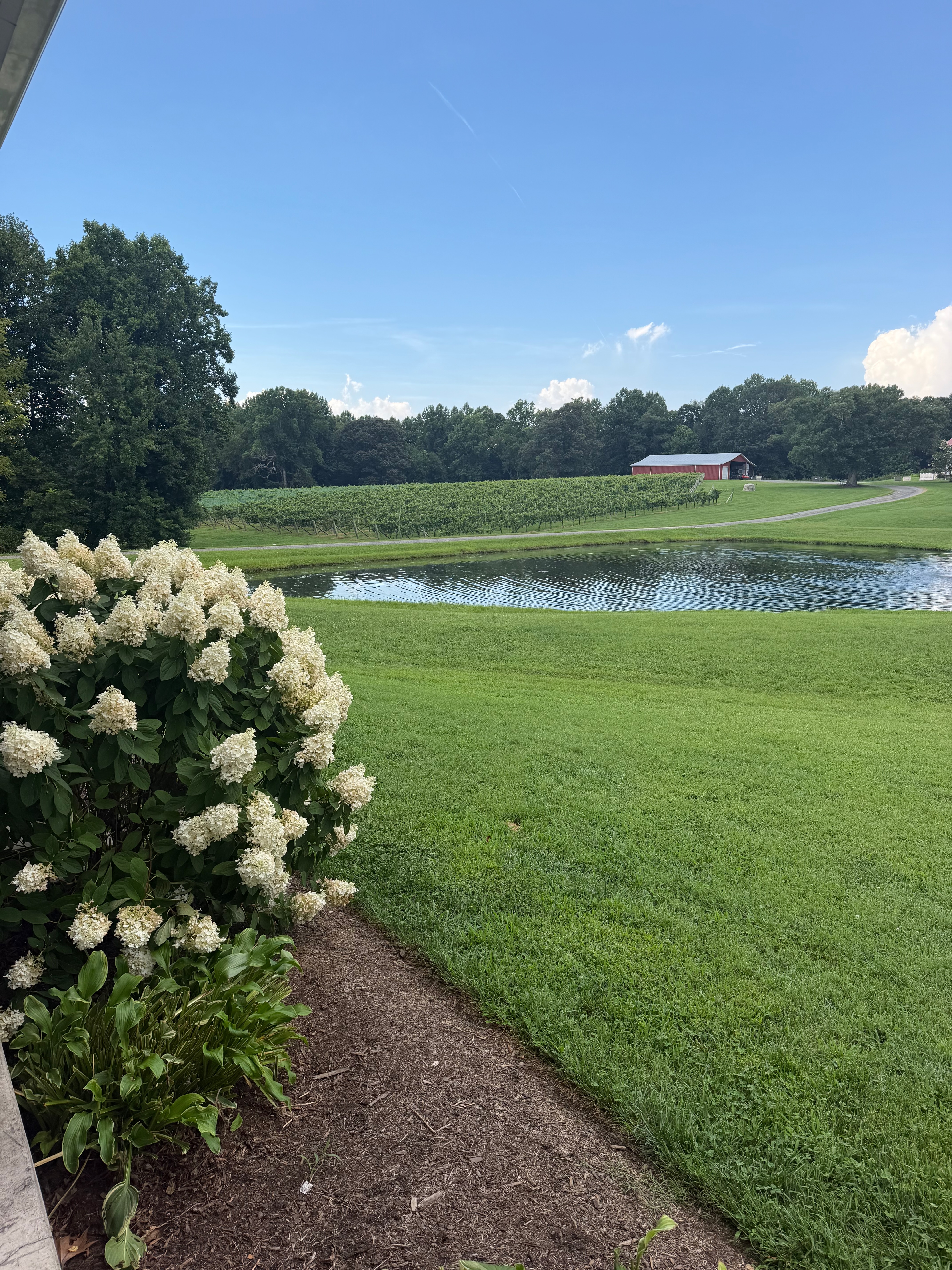
There is something special about opening a bottle that has quietly rested in a cellar for more than a decade. Young wines tell us where they are headed. Mature wines reveal whether they fulfilled that promise.
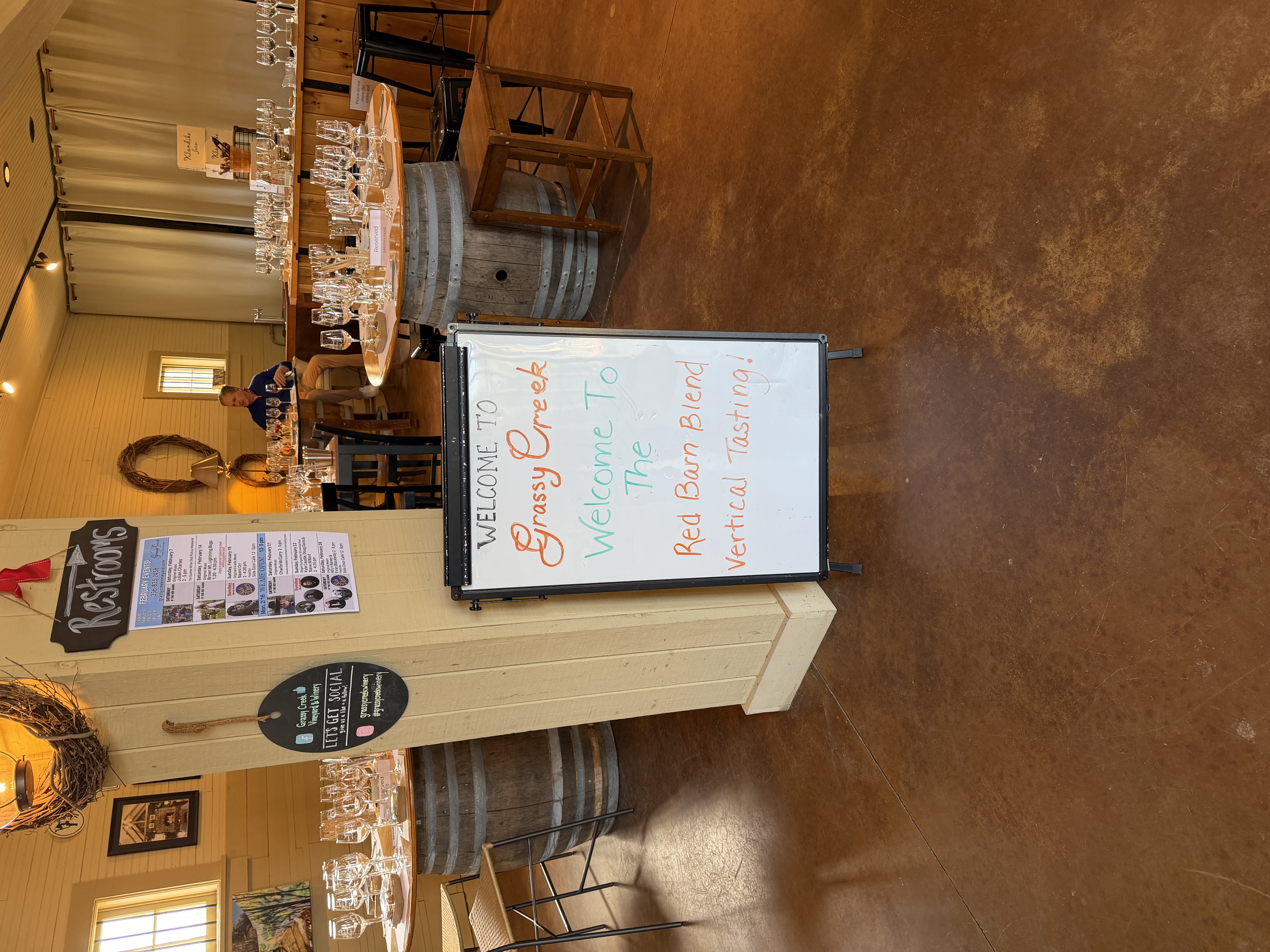
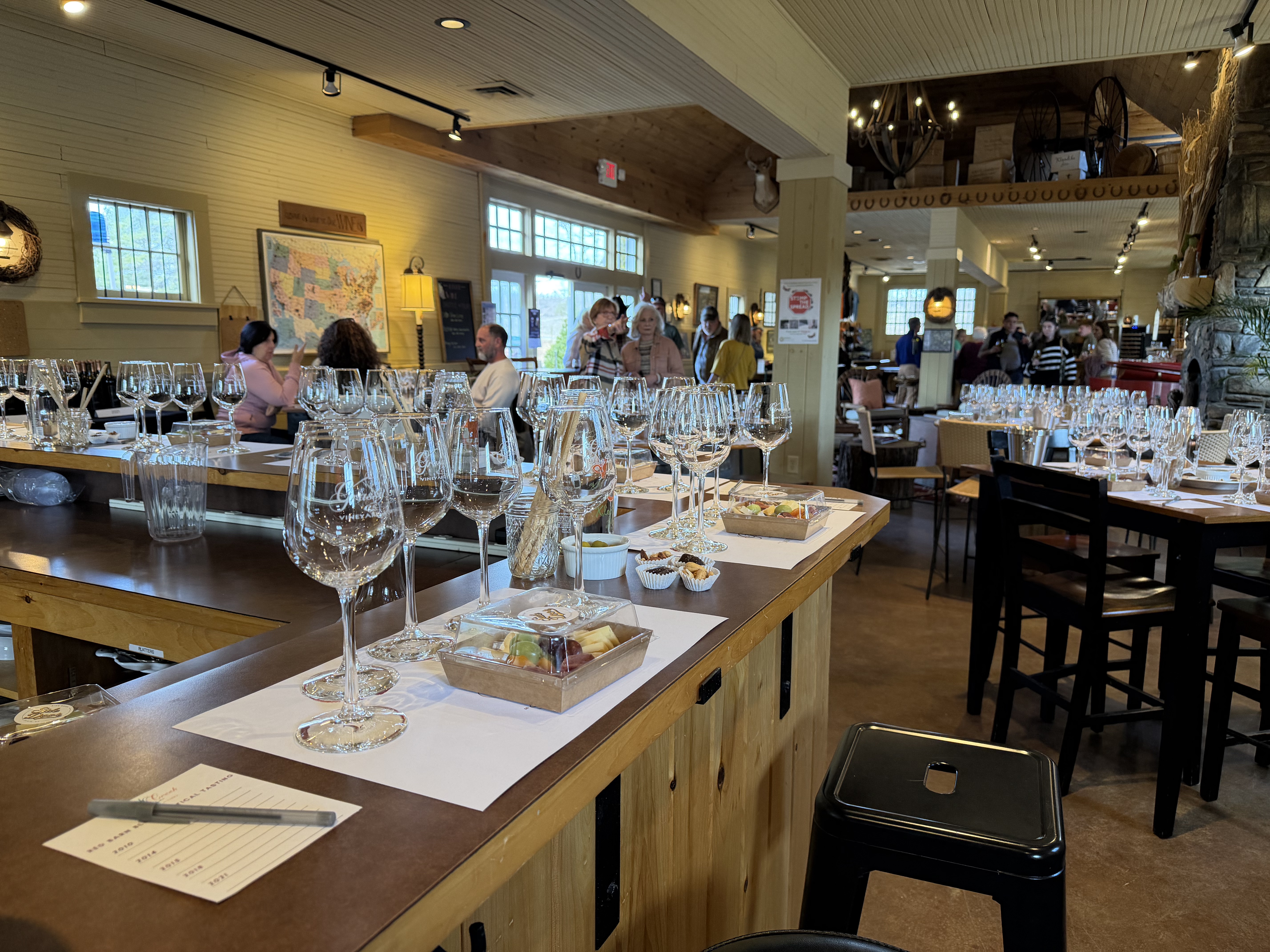
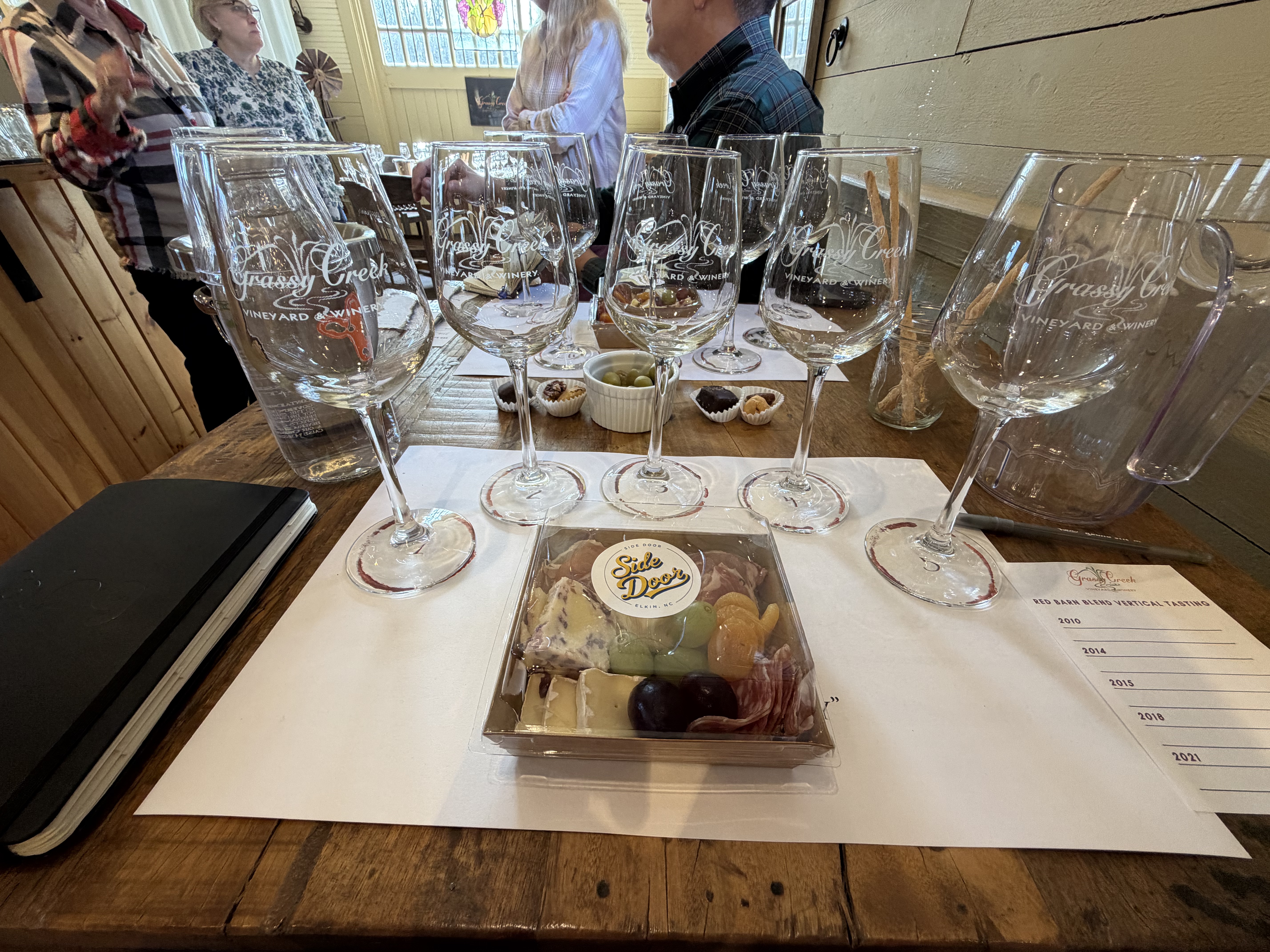
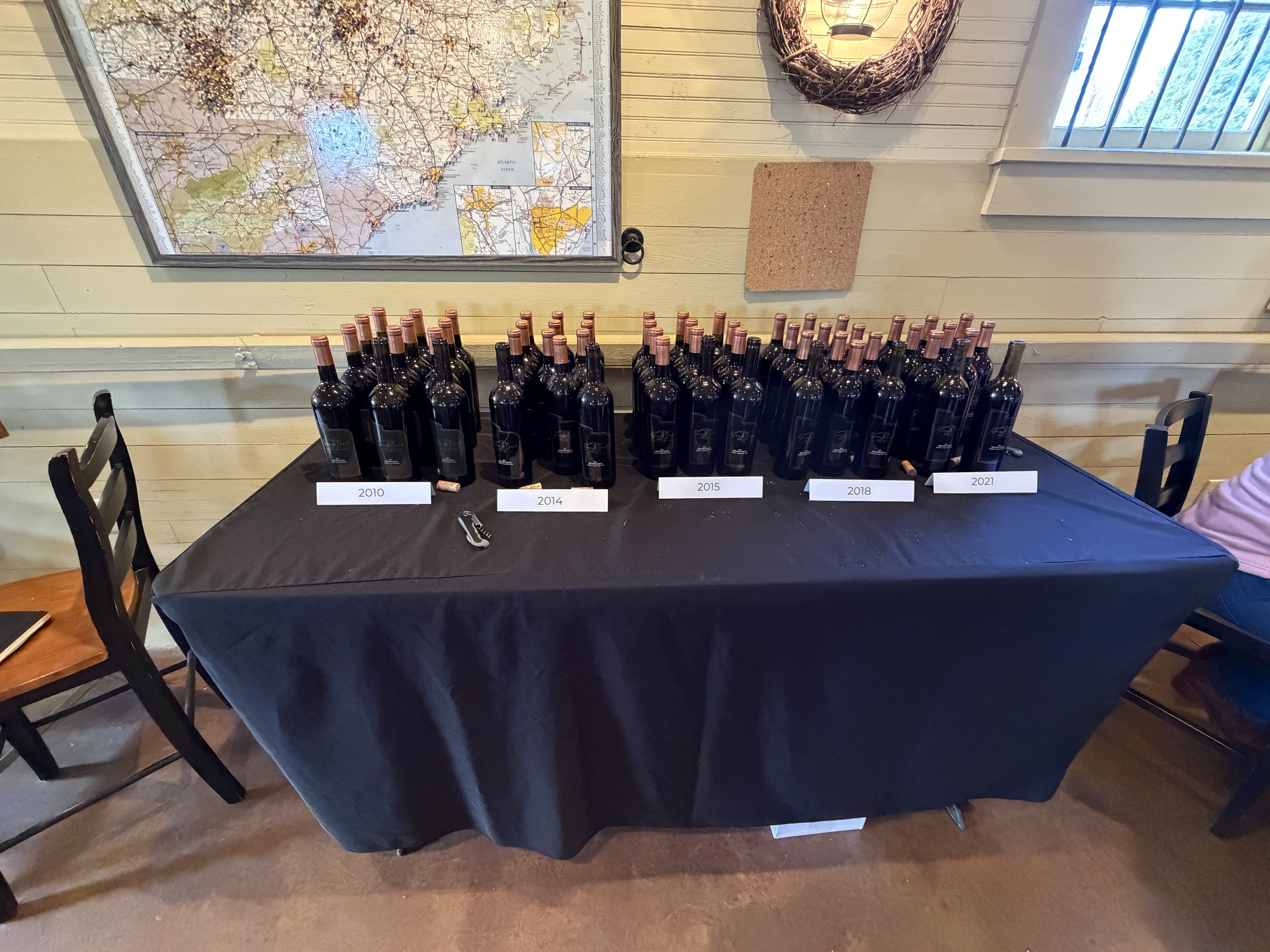
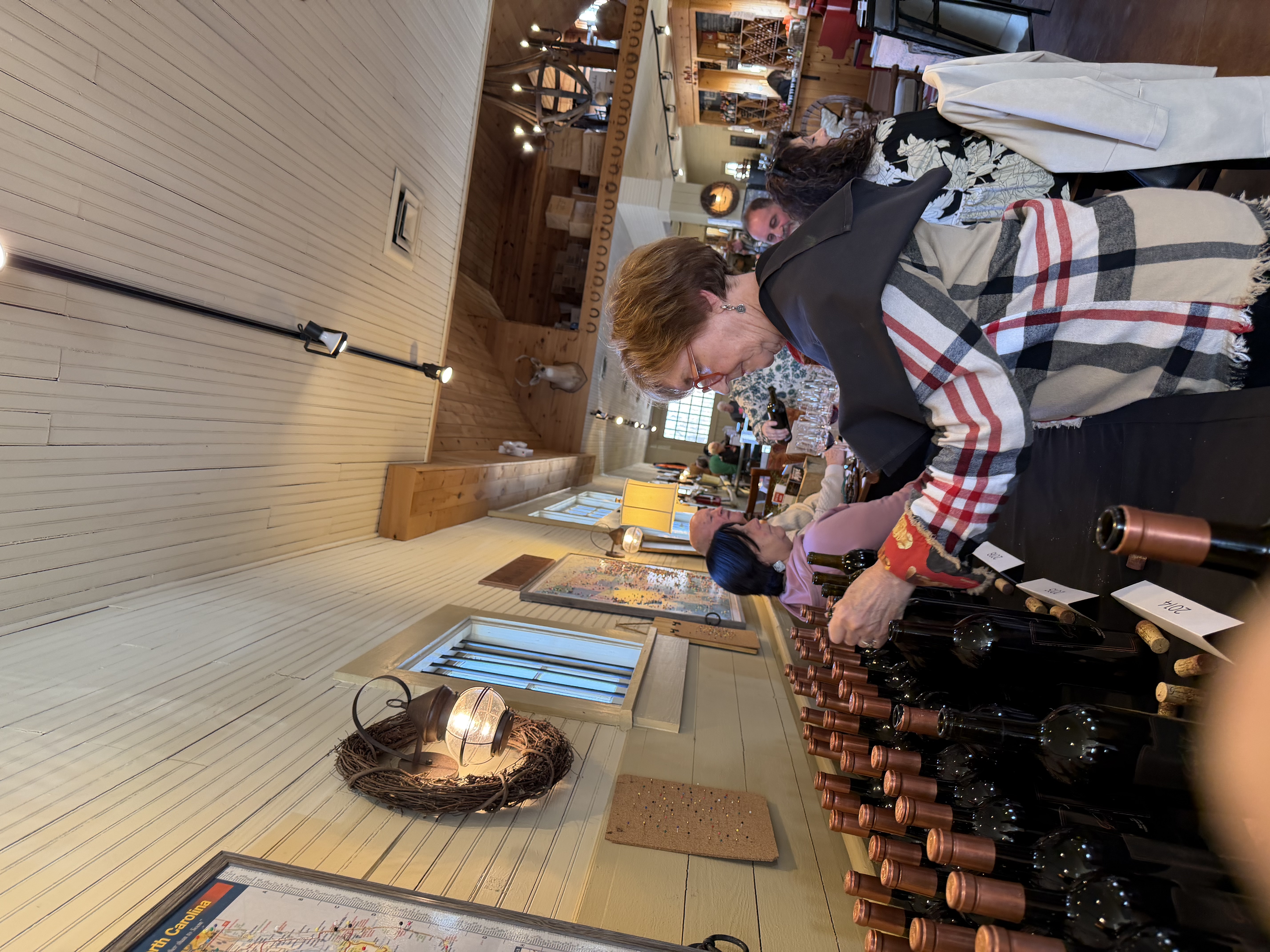
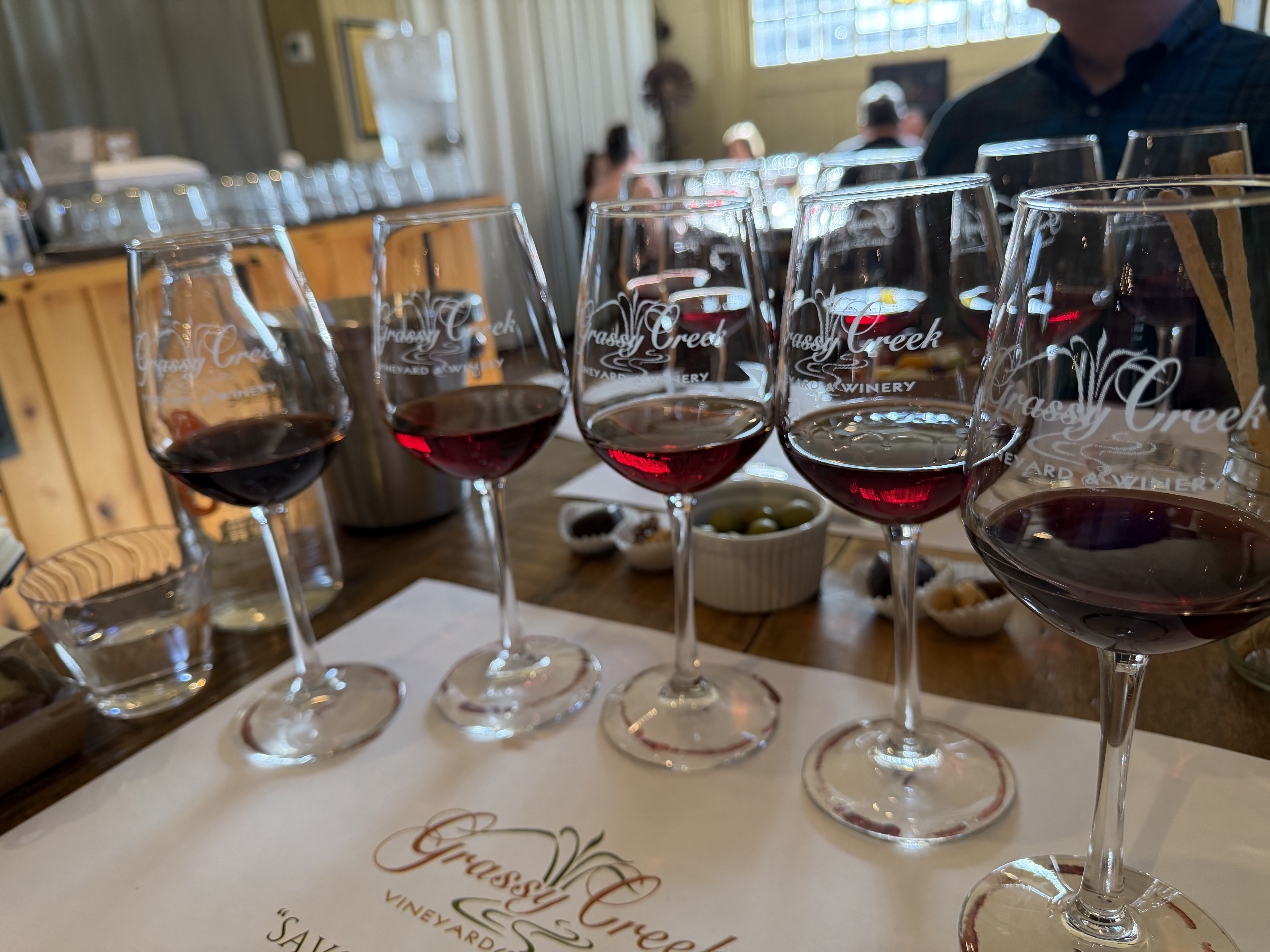
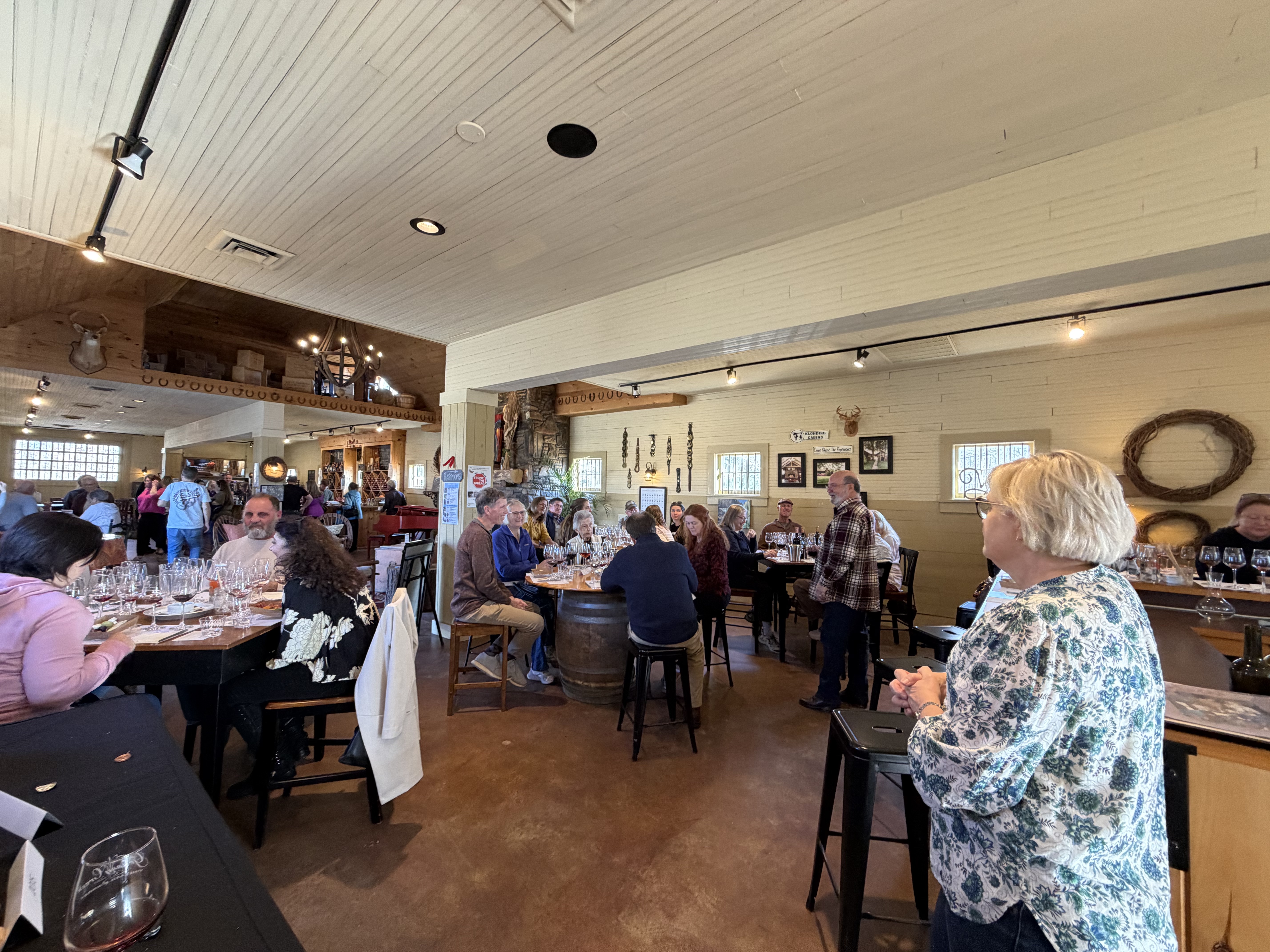
Recently, we were invited to join wine club members at Laurel Gray Vineyards in Hamptonville for a library red wine tasting and auction featuring a selection of older vintages that have been carefully cellared by the winery. The event offered a rare opportunity to revisit wines spanning nearly twenty years of Laurel Gray’s winemaking history and to see firsthand how these North Carolina reds have evolved over time.
A Little Laurel Gray History
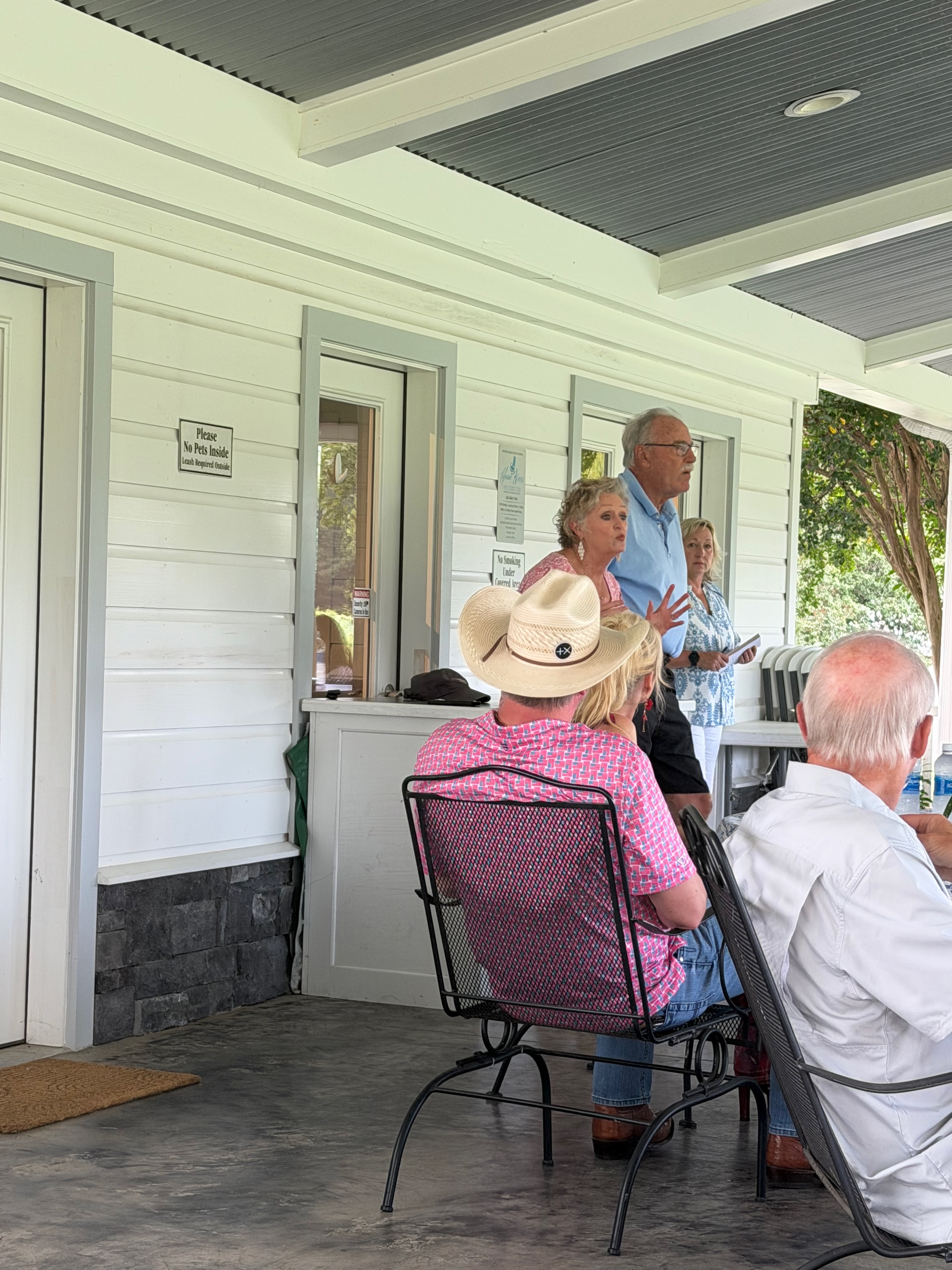
Laurel Gray Vineyards is one of the hidden gems of the Yadkin Valley. The winery sits on land that has been in the family for generations. Owners Benny and Kim Myers have built the vineyard around a philosophy of producing wines that reflect both place and family heritage.
Over the years, Laurel Gray has developed a reputation for producing well crafted red blends and varietal wines from traditional European grape varieties. Their focus on careful vineyard management and patient winemaking was on full display during this library tasting.
As Benny reminded attendees, wines selected for the auction had to be “worthy” of being pulled from the cellar. After tasting through the lineup, it was easy to see why these bottles made the cut.
2009 Scarlet Mountain
The tasting opened with the 2009 Scarlet Mountain, a blend of Merlot, Cabernet Franc, and Cabernet Sauvignon.
The wine showed only slight browning at the edge, impressive for a wine approaching two decades of age. The color remained a beautiful garnet with ruby highlights. Aromas were subtle but inviting, leading to flavors of red cherry and red plum with oak lingering on the finish.
One particularly interesting note shared during the tasting was that the original hand painted label featured artwork by Kim Myers, inspired by the color of nearby Scarlet Mountain and local tobacco barns.
The wine was remarkably easy to drink and demonstrated how gracefully this blend has aged.
2014 Shiloh
Next came the 2014 Shiloh, a Cabernet Franc based wine that quickly became one of the afternoon’s favorites and one of our favorites during its initial release.
Deep ruby and garnet hues filled the glass with almost no signs of significant aging. Aromas of black cherry and spice led into flavors of black plum and dark fruit. The palate remained smooth and balanced with a long finish.
This wine showed tremendous maturity without losing its fruit character. Several attendees commented on how complete and harmonious the wine felt after more than a decade in bottle.
2009 Windsor
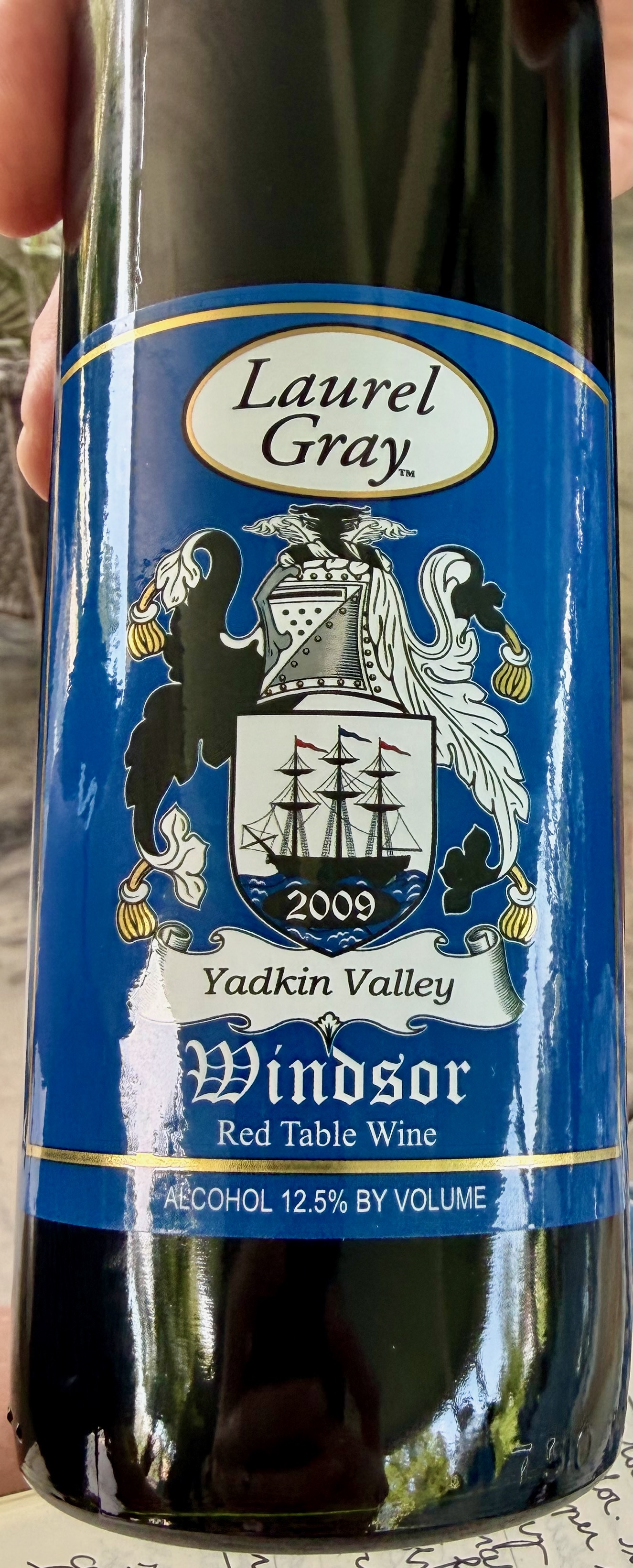
The 2009 Windsor red blend followed and delivered another pleasant surprise. The label features the Myers family crest.
The color remained remarkably even with minimal browning. Aromas and flavors of black cherry, black tea, leather, and spice emerged from the glass. Dark fruit characteristics remained vibrant, supported by firm but elegant tannins.
The wine displayed both power and finesse. It was one of the more structured wines of the afternoon while still maintaining excellent balance.
2011 Family Select
The 2011 Family Select was created in place of Windsor that year and also featured a blend of Merlot, Cabernet Franc, and Cabernet Sauvignon.
This wine offered layers of black cherry, dried blueberry, plum, caramel, and vanilla. The palate combined mature fruit with secondary characteristics that only develop through aging. Smooth tannins and lively acidity kept the wine fresh and engaging.
The Family Select showed why cellaring can be so rewarding. It possessed complexity that simply cannot be replicated in a young wine.
2010 Scarlet Mountain
Another Scarlet Mountain appeared later in the lineup, allowing guests to compare vintages.
Darker in color than the 2009 version, the 2010 displayed notes of cherry, vanilla, leather, and spice. The wine remained juicy and fruit driven while still showing the development that comes with age.
Many tasters found it especially approachable and enjoyable. It was one of those wines that seemed to disappear from the glass far too quickly.
2012 Cabernet Sauvignon
Made under winemaker Eric Murphy, the 2012 Cabernet Sauvignon showcased the aging potential of Laurel Gray’s varietal wines.
Leather, smoke, spice, and blueberry notes dominated both the nose and palate. The wine possessed bright acidity, polished tannins, and impressive balance. Nothing felt overdone. Instead, every component worked together seamlessly.
This bottle demonstrated that North Carolina Cabernet Sauvignon can age beautifully when carefully crafted.
2014 Cabernet Sauvignon
If there was a crowd favorite, the 2014 Cabernet Sauvignon was certainly in the conversation.
Produced under winemaker Charlie Kidd, the wine delivered expressive aromas of dried blueberry, spice, toast, smoke, and leather. Despite its age, the wine remained vibrant and energetic with excellent acidity and structure.
Bold, juicy, and beautifully balanced, this wine captured plenty of attention during both the tasting and auction portions of the event. This wine was easily our favorite. Luckily, we came home with two bottles.
The 1773 Bourbon Barrel Cabernet Sauvignon
One of the most unique wines poured was the 2018 “1773” Bourbon Barrel Cabernet Sauvignon. 1773 is an homage to the year the land was originally granted to the Myers family by the British crown.
Originally aged in French oak and then finished in Jack Daniel’s bourbon barrels, this wine offered deep color and distinctive aromas. Notes of blueberry, cherry, spice, toasted oak, and bourbon integrated surprisingly well.
The palate was rich and structured with firm tannins that remained well balanced. This wine provided a fascinating look at Laurel Gray’s willingness to experiment while maintaining elegance and drinkability.
2013 Bounty
The 2013 Bounty red blend of Cabernet Sauvignon, Cabernet Franc, and Merlot showed more advanced maturity than some of the other wines.
Earthy notes, dried fruit, black plum, and hints of raisin emerged alongside smooth tannins and good acidity. While some of the youthful fruit had faded, the wine offered an intriguing look at the later stages of bottle development.
2014 Petit Verdot
The final standout of the afternoon may have been the 2014 Petit Verdot.
As Laurel Gray’s first varietal Petit Verdot, this wine remains an impressive achievement. The color was still intensely dark and inky with very little indication of age. Aromas and flavors of dried blueberry, plum, vanilla, and graphite created a complex profile.
The tannins remained firm but were beautifully integrated. Bright acidity and a long blue fruit finish tied everything together.
Most remarkably, the wine looked and tasted far younger than its age would suggest.
Final Thoughts
What made this event memorable was not simply the opportunity to taste older wines. It was the chance to see the history of Laurel Gray Vineyards unfold one bottle at a time.
Some wines showcased youthful fruit that had endured. Others revealed the tertiary characteristics that only emerge after years in bottle. Together they told a story of patient winemaking and careful cellaring.
Events like this remind us that North Carolina wines are capable of far more than many people realize. The bottles poured were proof that age worthy reds are being made right here in the Yadkin Valley.
Our thanks to Benny, Kim, and the entire Laurel Gray team for opening these cellar treasures and sharing the stories behind them.